
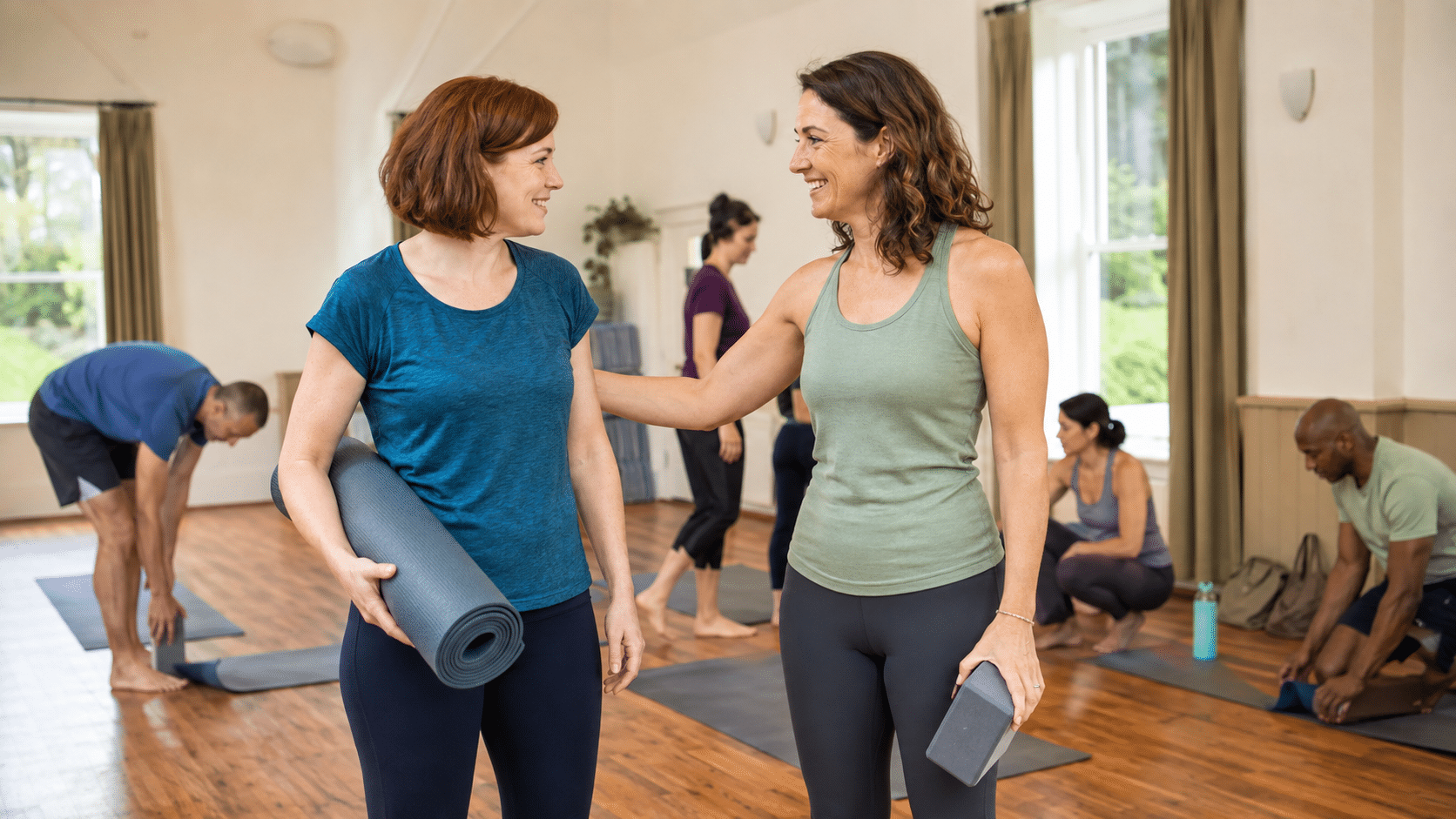
Going to your first yoga class can feel slightly intimidating, particularly if you are worried that everyone else will be more flexible or already know what they are doing. The reassuring truth is that beginner-friendly yoga classes are designed for people who are still learning. You do not need to be flexible, understand Sanskrit or own expensive yoga clothing before you begin.
A good teacher will explain the movements, offer alternatives and encourage you to work at a level that feels comfortable. Here is what you can expect before, during and after your first class, along with practical advice to help you arrive feeling prepared.
1. Choose a class suitable for beginners
Yoga classes vary considerably in pace, intensity and teaching style, so choosing the right class is an important first step.
Look for descriptions containing phrases such as:
- Beginners welcome
- Suitable for all levels
- Gentle yoga
- Hatha yoga
- Chair yoga
- Foundation or introductory class
A fast-paced Vinyasa or advanced Ashtanga class may not be the easiest introduction, although this depends on your fitness, mobility and previous experience. If a class description does not make its suitability clear, contact the teacher before booking.
You can use HYA’s Find a Yoga Class service to explore local and online classes. You can also read our Yoga for Beginners guide for help choosing a style and getting started.
When comparing classes, read the teacher’s profile as well as the timetable. HYA yoga teacher profiles can tell you about a teacher’s qualifications, experience, specialist interests and approach to teaching.
2. Contact the teacher if you have questions
It is perfectly acceptable to contact the teacher before attending, especially if you:
- Have an injury or health condition
- Are pregnant or have recently given birth
- Have limited mobility
- Experience difficulties getting down to or up from the floor
- Feel anxious about joining a group
- Are unsure whether the class is suitable for complete beginners
You do not need to provide your complete medical history. Briefly explain anything that may affect your participation and ask whether the class would be appropriate.
For example:
“I’m new to yoga and sometimes experience discomfort in my right knee. Would your Wednesday class in Winchester be suitable, and are poses usually adapted where necessary?”
This gives the teacher enough information to offer useful guidance before you book.
Yoga teachers cannot diagnose medical conditions. If you are recovering from surgery, managing a significant injury or have been advised to restrict physical activity, speak to an appropriate healthcare professional first.
3. Find out what you need to bring
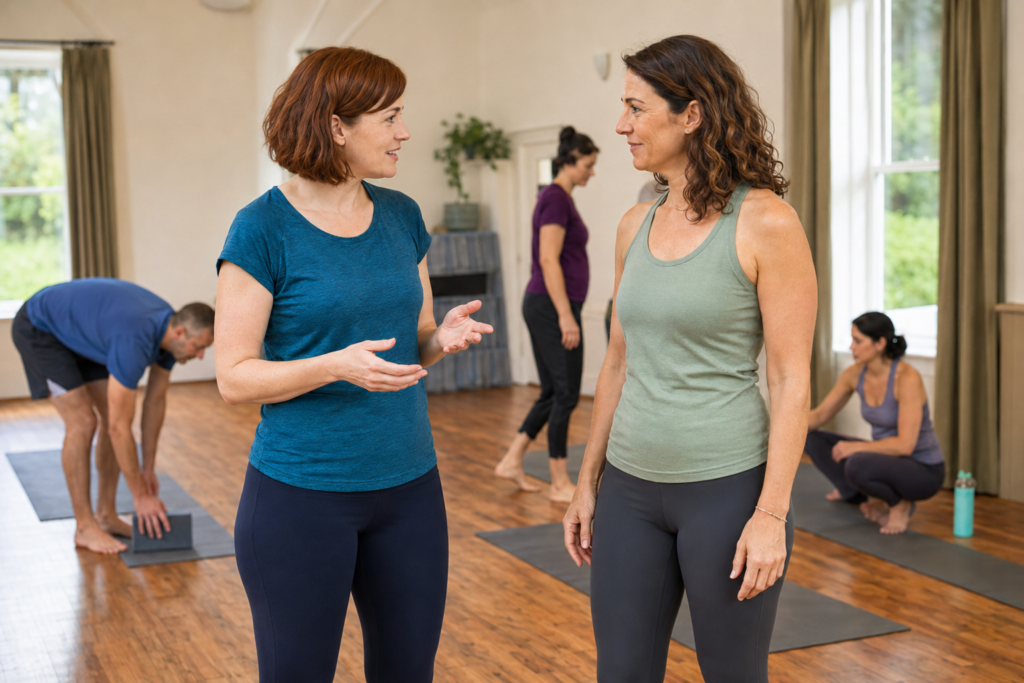
Many venues provide mats and other equipment, but this is not guaranteed. Check the listing or ask the teacher whether you need to bring your own yoga mat.
Useful items may include:
- A yoga mat
- A bottle of water
- An extra layer for relaxation
- A small towel
- Any personal support you regularly use, such as a knee cushion
Teachers may also use blocks, straps, bolsters and blankets. These are not signs that you are finding yoga difficult: they are tools that help make poses more comfortable and accessible. Experienced practitioners use them too.
Imagine you are attending an evening class in a Hampshire village hall. The room may feel warm while you are moving but cooler during the final relaxation, particularly in winter. A jumper, pair of socks or light blanket can make the last part of the class much more enjoyable.
4. Wear comfortable clothing
You do not need specialist yoga clothes. Choose clothing that allows you to move freely without needing frequent adjustment.
Leggings, jogging bottoms, shorts and a comfortable T-shirt are all suitable. Very loose tops can fall towards your face when you bend forward, so you may prefer a closer-fitting top or an additional layer tucked into your waistband. Also it can be worth checking trousers can cope with not being see through when you bend forward so check in a mirror.
Yoga is normally practised barefoot because this provides better contact with the mat. Shoes are generally left near the entrance to the room. Socks may be worn before and after the active part of the class, and some people use specialist non-slip yoga socks.
5. Arrive around 10–15 minutes early
Arriving early gives you time to find the venue, introduce yourself and set up without feeling rushed. It is particularly helpful when attending a community centre, school or village hall where the correct entrance may not be immediately obvious.
Tell the teacher that it is your first class. This allows them to explain how the session works and check whether there is anything they need to know.
If you are attending a class in Southampton city centre, allow additional time for parking or walking from public transport. For a class in a rural venue outside Basingstoke or Winchester, check the precise address and parking arrangements before leaving home.
Try not to eat a large meal immediately before the class. A light snack is usually fine if you need one, but many people find it more comfortable to leave approximately two hours between a full meal and yoga.
6. Expect the class to begin quietly
Every teacher has a different approach, but many classes start with a few minutes of stillness, breathing or gentle movement. This helps participants settle and shift their attention away from the rest of the day.
A typical class might include:
- A short introduction or breathing exercise
- Gentle movements to warm the body
- Standing, seated or floor-based postures
- A slower cool-down
- A final relaxation
The exact structure will depend on the style. A gentle Hatha class may spend time exploring individual poses, while a Vinyasa class may link movements together in a flowing sequence. A Yin class usually involves fewer poses held for longer periods, often with support from cushions or bolsters.
The teacher may use Sanskrit names for some postures, but they should also explain or demonstrate what to do. Nobody expects a beginner to remember the terminology.
7. You do not have to copy everything perfectly
Yoga is not a competition, and poses do not need to look identical for every person. Differences in bone structure, mobility, strength, injuries and experience all affect how a posture looks and feels.
A teacher may offer several versions of the same movement. For example, during a balance pose, you might be invited to:
- Keep one hand against a wall
- Rest your toes on the floor
- Raise your foot only slightly
- Try the full balance if it feels steady
Choosing the supported version is not “failing” at the pose. It is often the most appropriate way to practise.
You can also rest whenever you need to. If something causes sharp pain, dizziness, numbness or difficulty breathing, stop and let the teacher know. Yoga can involve effort and unfamiliar sensations, but it should not require you to push through pain.
8. The teacher may offer hands-on guidance
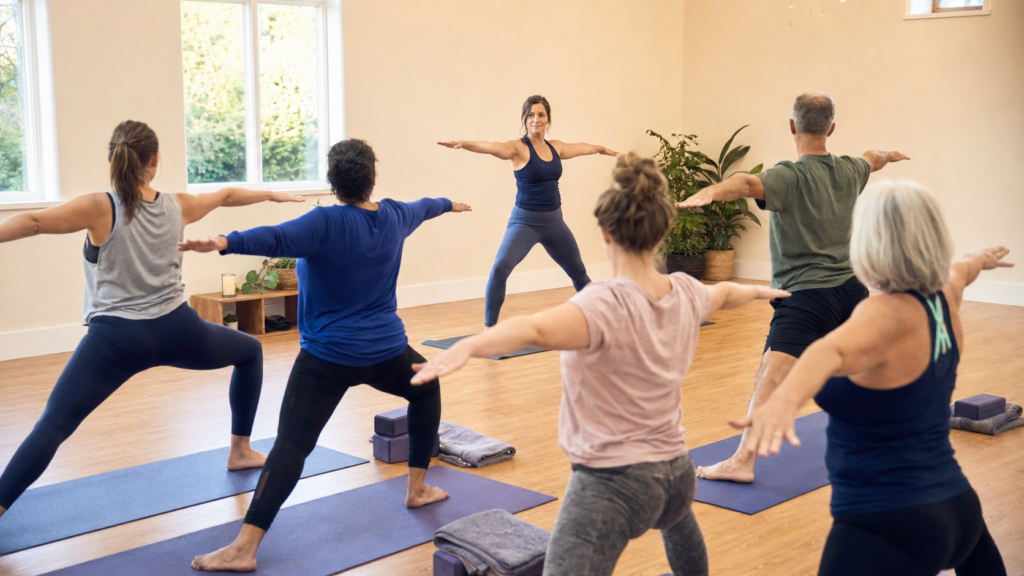
Some teachers use touch to help students adjust their position, while others teach entirely through spoken instructions and demonstrations.
You are always entitled to decline physical adjustments. Some teachers ask permission at the beginning of the class, while others check before approaching an individual student. A simple “I’d prefer verbal guidance, please” is enough. You do not need to give a reason.
9. The class will probably end with relaxation
Most classes conclude with a period of rest, often lying on the back in a pose called Savasana. The teacher may guide your attention around the body, play quiet music or simply allow the room to become still.
If lying flat is uncomfortable, ask for an alternative. You may be able to place a bolster under your knees, lie on your side or sit supported against a wall.
At the end, the teacher may say “Namaste”. You can respond if you wish, but you are not required to do so. Simply following the group as it begins to move and pack away is fine.
10. Pay attention to how you feel afterwards
After your first yoga class, you might feel relaxed, energised or pleasantly tired. You may also notice mild muscular stiffness the following day, especially if you used muscles in unfamiliar ways.
Drink normally, eat when you are ready and give yourself time to see how your body responds. Persistent or significant pain should not be regarded as a normal consequence of yoga.
One class is not always enough to decide whether yoga is right for you. Sometimes the teaching style, venue or pace is simply not the best match. Trying a different teacher or type of yoga may produce a completely different experience.
Frequently asked questions
Do I need to be flexible?
. Flexibility may gradually develop through yoga, but it is not a requirement for starting. Strength, balance, breathing, concentration and relaxation are also important parts of the practice.
Will I have to do a headstand?
A beginner class should not expect you to perform advanced inversions. If a pose is offered and you do not feel comfortable attempting it, you can choose an alternative or rest.
What if I cannot sit cross-legged?
You can sit on a block, use a chair, straighten your legs or choose another comfortable position. Sitting cross-legged is not a test you need to pass before joining a class.
Can I leave during the class?
Is it all right to attend alone?
Should I bring my phone into the room?
Take the first step
Your first yoga class does not need to be perfect. Your only job is to arrive, listen to your body and give yourself permission to learn.
Start by exploring yoga classes near you, then use the accompanying teacher profiles to find someone whose experience and approach suit your needs. If you are still unsure, send the teacher a short message before booking—most will be pleased to help a new student choose an appropriate class.
Are you a Hampshire yoga teacher looking to make it easier for beginners to discover your classes? Read How to Attract More Yoga Students and learn how HYA Teacher Membership can give you a searchable profile, class listings and a place in the association’s public yoga teacher directory.